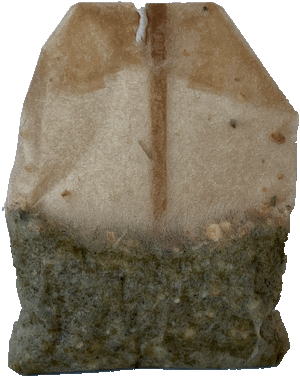
I am often a mix of natural fibers like wood pulp and abacá fibers, as well as thermoplastics like polypropylene.
My pyramid shaped self in particular is often made from nylon, and less commonly silk and soilon (a type of polyester)
Of my many components and many origins, one of them stands out…
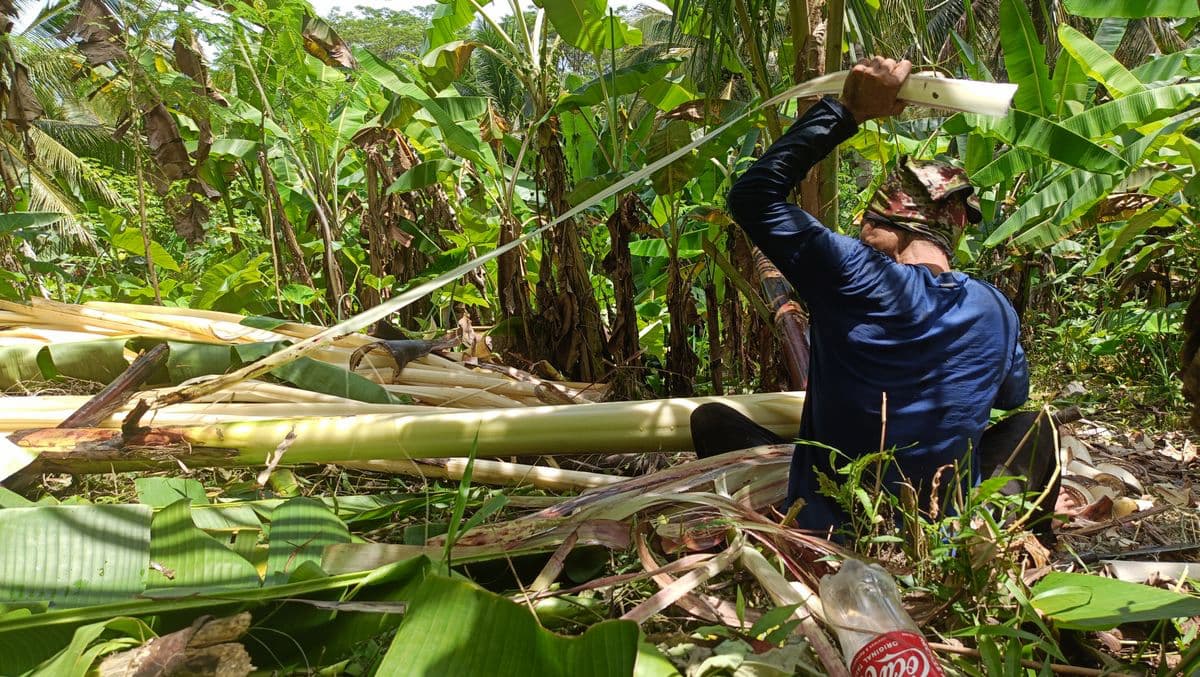
Abacá fibers are sourced from the Abacá plant, which is endemic to the Philippines. The plant itself is used in many ways, ranging from native textiles like the T’nalak of the T’boli people, to being present in banknotes, and of course filter paper like tea bags.
Its use in tea bags is thanks to its high wet strength, and it actually used to be ideal for making ropes used in maritime shipping. It’s superior strength over hemp, which was what America mainly used before the Philippines came under their rule, gave it the name Manila Hemp despite it actually being a banana plant.
Indeed, as plantations and abacá fiber production ramped up under American rule, the plant brought about great change to the Philippines. Some expected, like the destruction of local biodiversity, labour exploitation, and economic over-reliance on the export. Some were more interestingly unique, such as the introduction of America concepts of land ownership and its impact on Philippine-American political relations.
While the Philippines still produces majority of the world’s abacá, the fiber is no longer as relevant in the 21st century thanks to cheaper synthetic fibers like nylon. The ease of which colonial powers can bring devastating and everlasting changes to a country’s ecosystems and politics, paired with how readily these countries are thrown away once they no longer provide valuable resources, the tragedy stings me as I look at the humble tea bag sitting on my desk.
Of course, we do not think of the journey it has been through, the labour and the many hands involved in making a tea bag as we throw it away.
Its context as waste in a linear economy is something that explicitly affects how the tea bag is designed and manufactured. Its diverse composition reflects how it is made from materials from the end of the production line, and not made to last. A neatly folded tiny sachet, it even comes with a string and tag for you to easily pull it out of your cup and toss it into the bin.
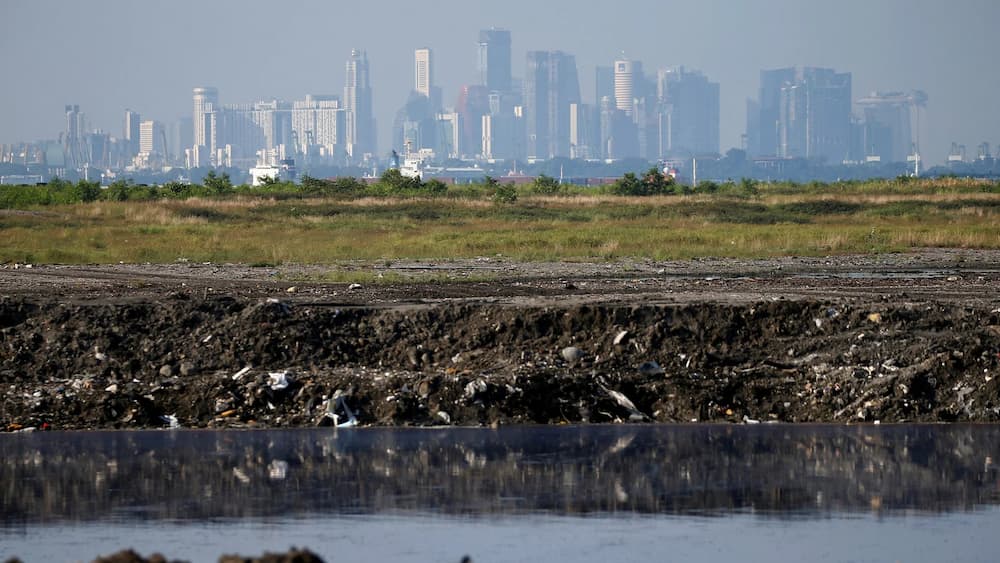
These design aspects of the tea bag lends it its physical subtlety, easily blending into the background and disappearing from your point of view. This “out of sight, out of mind” sentiment is one I’m particularly sensitive to as a Singaporean. Coming from a country where the government has displaced indigenous islanders from their home to turn it into a landfill, one that they have greenwashed and have ensures its presence does not come into view of the average citizen, it is apparent to me that the tea bag as a product reflects our concept of waste materials as something that is no longer useful and thus should cease to exist.
Yet of course, the tea bag does not disappear once thrown. After all, to quote Fu Xiyao in their essay “Dumpster Diving in Semakau: Retrieving Indigenous Histories from Singapore’s Waste Island”,
“Waste is not a rigid, scientific category but a fluid, socio-cultural construct… waste and garbage are both irreducibly material and yet culturally constructed and economically determined.”
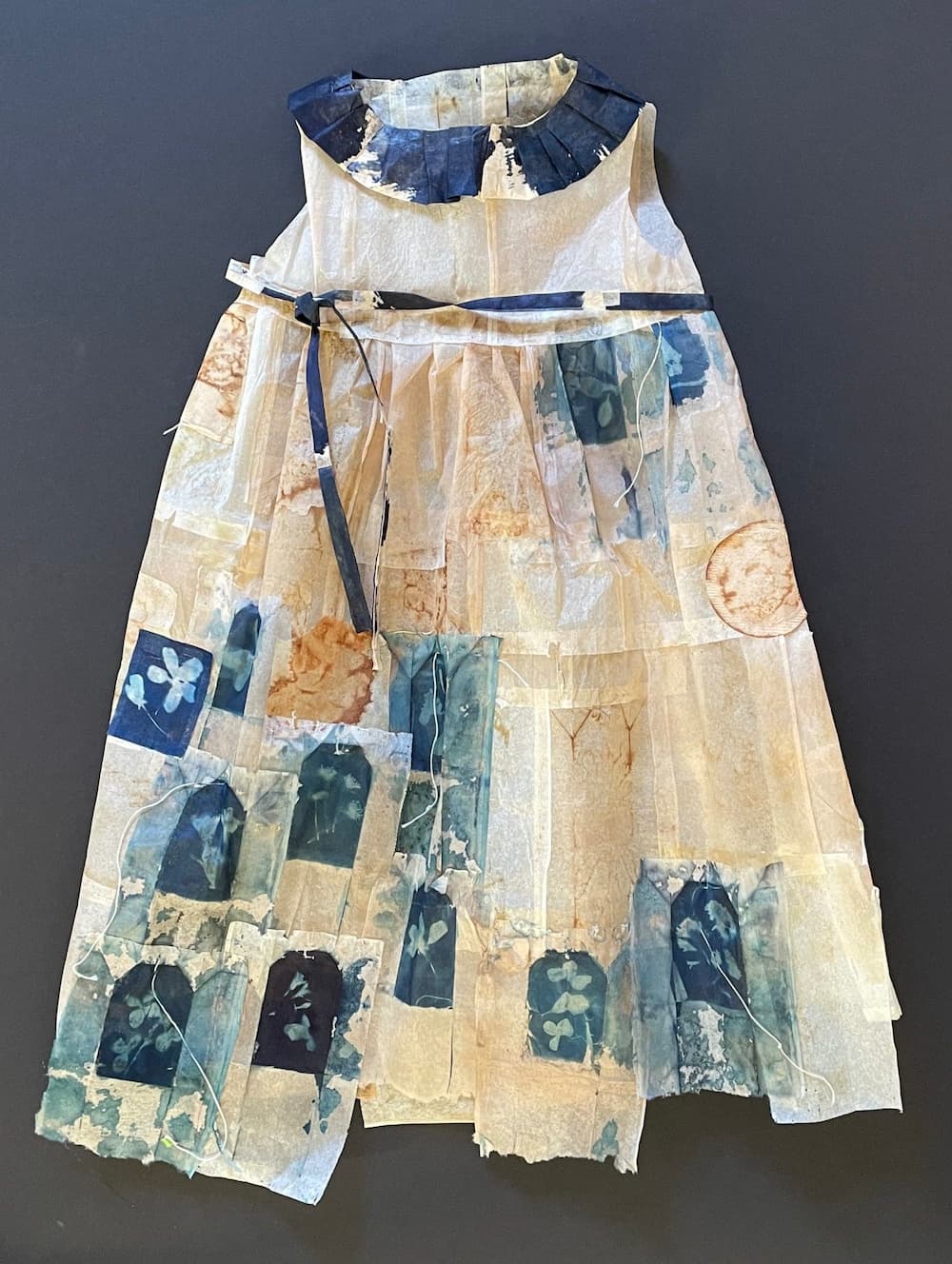
Ruby Silvious, though more known for her simple paintings using tea bags as canvases, has ventured into more creative uses of the material.
Dressed to a Tea is a series of garments made with used tea bags. Each garment uses “approximately 75 to 125 sachets, each one emptied out, flattened, and ironed before being glued together into shirts, slips, or child-size dresses.” The works also feature printing techniques like cyanotypes and monoprints.